
Let's start with what's actually true
Your body changes after 40. This is not a problem. It's also not a tragedy. It's information.
Estrogen and testosterone both shift. Tissue becomes thinner and less elastic. Lubrication takes longer to arrive. The pelvic floor loses some of its elasticity from estrogen withdrawal. But here's the part nobody tells you: your neural pathways for pleasure remain intact. Your clitoral nerve density doesn't drop. Your brain's ability to experience orgasm doesn't decline. What changes is the mechanism, not the capacity.
This matters because most of what you've read about pleasure after 40 falls into one of two camps: "everything still works exactly as before, don't worry" or "here's what's broken, let me fix it." Neither is honest. Something shifts. And once you understand what, you can work with it instead of against it.
Why lemon vibrators work so well for this shift
Traditional vibrators rely on percussion. They buzz. The sensation requires direct friction against tissue that's now thinner and more sensitive. For many women over 40, standard vibration intensity that felt perfect at 35 now feels either too intense or weirdly numb, depending on the pattern.
A lemon vibrator works differently. The suction mechanism creates a gentle pulling sensation rather than a pushing one. It stimulates the thousands of nerve endings in your clitoral complex without demanding the same level of direct friction. Think of it as a conversation with your body instead of a demand.
This isn't marketing language. It's anatomy. The lem vibrator and similar clitoral suction toys reduce the baseline stimulus intensity while actually increasing sensation quality for many women over 40. You're not compensating for less pleasure. You're actually accessing pleasure more efficiently.
What hormonal changes mean for your experience
Estrogen drops. This shifts three specific things:
Lubrication timing. Your body now needs 15 to 25 minutes of foreplay before natural lubrication arrives, where it might have taken 5 to 10 at 30. This isn't a malfunction. It's rhythm. A water-based lubricant becomes a genuine asset, not optional.
Tissue sensitivity. The vaginal and vulvar tissue thins. This makes some areas feel more sensitive and others less responsive. The clitoris itself stays highly innervated, which is why clitoral vibrators remain effective, but the surrounding tissue now needs gentler approach.
Orgasm architecture. You might notice your orgasms feel different. Maybe more localized. Maybe less intense. Maybe actually longer, or different in texture. This variation is normal. Many women report that post-40 orgasms feel more complex, arriving in waves instead of peaks.
Testosterone decline (yes, women produce testosterone) can lower baseline desire. This is where the mental piece becomes crucial. If you're exhausted, stressed, or resentful in your relationship, that's not a hormone problem. That's a life problem. Separating the two matters.
The physical adjustments that actually work
Four non-negotiable things I recommend:
Use lubricant as standard, not emergency. A quality water-based lube makes everything more comfortable and more pleasurable. You're not broken. Lubrication is just how thinner tissue works now. Apply it before stimulation and reapply as needed. The sensations are actually richer with it.
Extend warm-up time. Budget 20 to 30 minutes instead of 10. This isn't lost time. This is foreplay. Your nervous system needs longer to shift into pleasure mode, and that extended time builds anticipation rather than frustration.
Start low on intensity settings. Most lemon suction vibrators have 7 to 10 settings. Begin at level 1 or 2 and increase slowly. You're not being conservative. You're letting your body acclimate to the sensation. Speed up once you feel ready.
Treat your pelvic floor like a muscle, because it is. Kegels help, but equally important is learning to relax your pelvic floor fully. After 40, many women unconsciously grip their pelvic floor during arousal. This reduces sensation and delays orgasm. Deep belly breathing helps. So does actually practicing letting go.
Why lemon clitoral vibrators suit your body better now
The lem vibrator's suction-based stimulation has specific advantages for bodies over 40. First, suction doesn't require the same tissue thinness tolerance that direct vibration does. Second, the sensation feels more distributed across the clitoral complex rather than concentrated on one spot. Third, you can control intensity through a combination of pattern selection and manual pressure, giving you real agency.
This doesn't mean other clitoral vibrators won't work. But many women over 40 find that the gentler suction approach feels more intuitive and more pleasurable than traditional vibration.
The emotional piece is bigger than you think
Menopause isn't the only transition happening at 40 plus. You might be grieving lost youth or reckoning with changed relationship dynamics. You might feel invisible or less sexually valuable. You might be managing a partner's anxiety about aging alongside your own. These feelings don't live in your hormones. They live in your relationship and your self-concept.
The most honest thing I can tell you: pleasure after 40 often requires you to actively choose yourself. If your relationship has been built around meeting someone else's needs, your pleasure might feel unfamiliar or even selfish. It's not. It's necessary.
If you're partnered, a lemon vibrator can become a bridge. It removes some of the performance pressure. It lets you explore sensation at your own pace. And it often makes partnered sex better because you're not relying on your partner to guess what your body needs now.
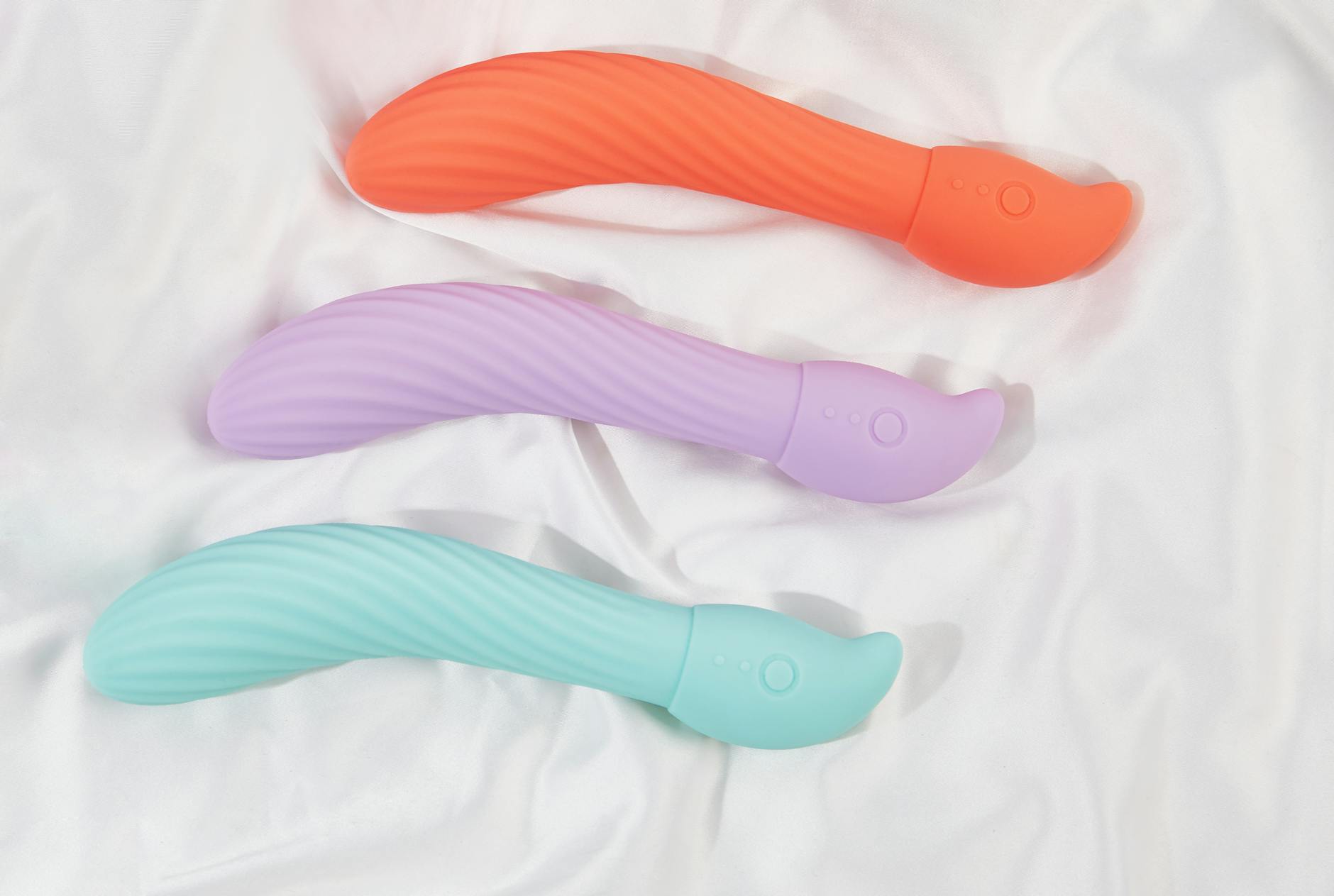
Photo by IFONNX Toys on Pexels
When something's genuinely wrong and how to tell
There's a meaningful difference between "my body responds differently now" and "sex is painful." Pain is information that something needs medical attention.
Genitourinary syndrome of menopause (GSM) is real and treatable. If you're experiencing pain during sex, vaginal dryness that doesn't respond to lubricant, or tissue fragility, see a gynecologist trained in menopause medicine. Topical estrogen creams, vaginal moisturizers, and systemic hormone therapy all exist. You don't have to white-knuckle through this.
If desire has completely flatlined and you've ruled out relationship issues and life stress, low testosterone is worth exploring. Testosterone therapy isn't widely prescribed in the US, but it's available, and for the right person, it's genuinely transformative.
The key question: is this a normal shift in how your body responds, or is this pain or dysfunction? Normal shifts are what this post is about. Dysfunction needs professional support.
The best part nobody tells you
Most of my clients over 40 eventually tell me the same thing: their most satisfying orgasms came after they stopped expecting their bodies to work the way they did at 25. Once you stop fighting the change and start working with it, pleasure often becomes deeper and more accessible.
You have decades of experience with your own body. You likely know what you want in relationships. You've probably stopped performing for other people's satisfaction. These are superpowers for pleasure. Your body might work differently now, but your wisdom works better. That's not a trade-off. That's an upgrade.
A lemon clitoral vibrator, used with intention and patience, often becomes the tool that makes this transition feel like expansion instead of loss. You're not compensating for aging. You're discovering pleasure your 25-year-old self didn't have the experience or permission to access.
FAQ: Common questions about lemon vibrators and aging pleasure
Is it normal for my orgasms to feel different after 40?
Completely normal. Many factors contribute: hormonal shifts, tissue changes, and sometimes changing relationship dynamics. Orgasms might feel more localized, take longer to build, or arrive differently than before. This variation is not a decline. It's a change. Some women describe post-40 orgasms as more complex or textured. What matters is whether you're satisfied, not whether it matches your 30s experience.
Will a lemon vibrator feel too strong or too gentle for my sensitive tissue?
Most lemon suction vibrators have adjustable intensity, which gives you real control. Start at the lowest setting and increase gradually. The suction approach is gentler than traditional vibration on thinner tissue, which is why many women over 40 find it more comfortable. If you have concerns about sensitivity, water-based lubricant and slower warm-up time matter more than the toy itself.
How long should foreplay actually take now?
Instead of timing it, pay attention to your body's signals. Most women over 40 need 20 to 30 minutes of mental and physical engagement before arousal fully arrives. This isn't inefficiency. This is your nervous system needing time to shift gears. If you're rushing this phase, you'll feel like something's missing. Give yourself permission to slow down.
Can I still have an orgasm with a lemon vibrator, or is that just for younger bodies?
Your orgasmic capacity doesn't decline with age. Your pathway to orgasm might change. A lemon clitoral vibrator works for bodies at every age because it stimulates the clitoris directly, and your clitoral nerve density doesn't diminish. Many women over 40 find that suction-based stimulation actually makes orgasm easier because the sensation is distributed rather than localized on thinning tissue.
Should I tell my partner I'm using a lemon vibrator?
That depends entirely on your relationship dynamic. If you're partnered, honesty usually works better than secrecy. A vibrator isn't a threat to your partner. It's information about what your body enjoys now. Some couples find that introducing a lemon clitoral vibrator into partnered sex actually improves intimacy because there's less pressure on your partner to "make it happen" and more focus on mutual pleasure.
Is there anything I should avoid after 40?
Your own discomfort is your best guide. Avoid intensity that feels painful or too sharp. Avoid pressure that makes you tense rather than relax. Avoid partners or scenarios where you feel unsafe or disrespected. Everything else is worth exploring. Your body doesn't get less capable after 40. It gets more specific about what it actually wants.
The bottom line
Your body changes. Your pleasure doesn't disappear. Pleasure might actually deepen once you stop expecting your body to work like it did 15 years ago and start learning how it works now.
A lemon vibrator is just a tool. But it's a tool that often makes this transition feel like possibility instead of loss. The suction mechanism, the adjustable intensity, the gentle approach to sensitive tissue. These aren't workarounds for aging. They're features designed for the bodies we actually have.
You deserve pleasure that works with your body, not against it. Over 40, that pleasure is often richer than you'd expect. You just have to be willing to meet yourself where you actually are.