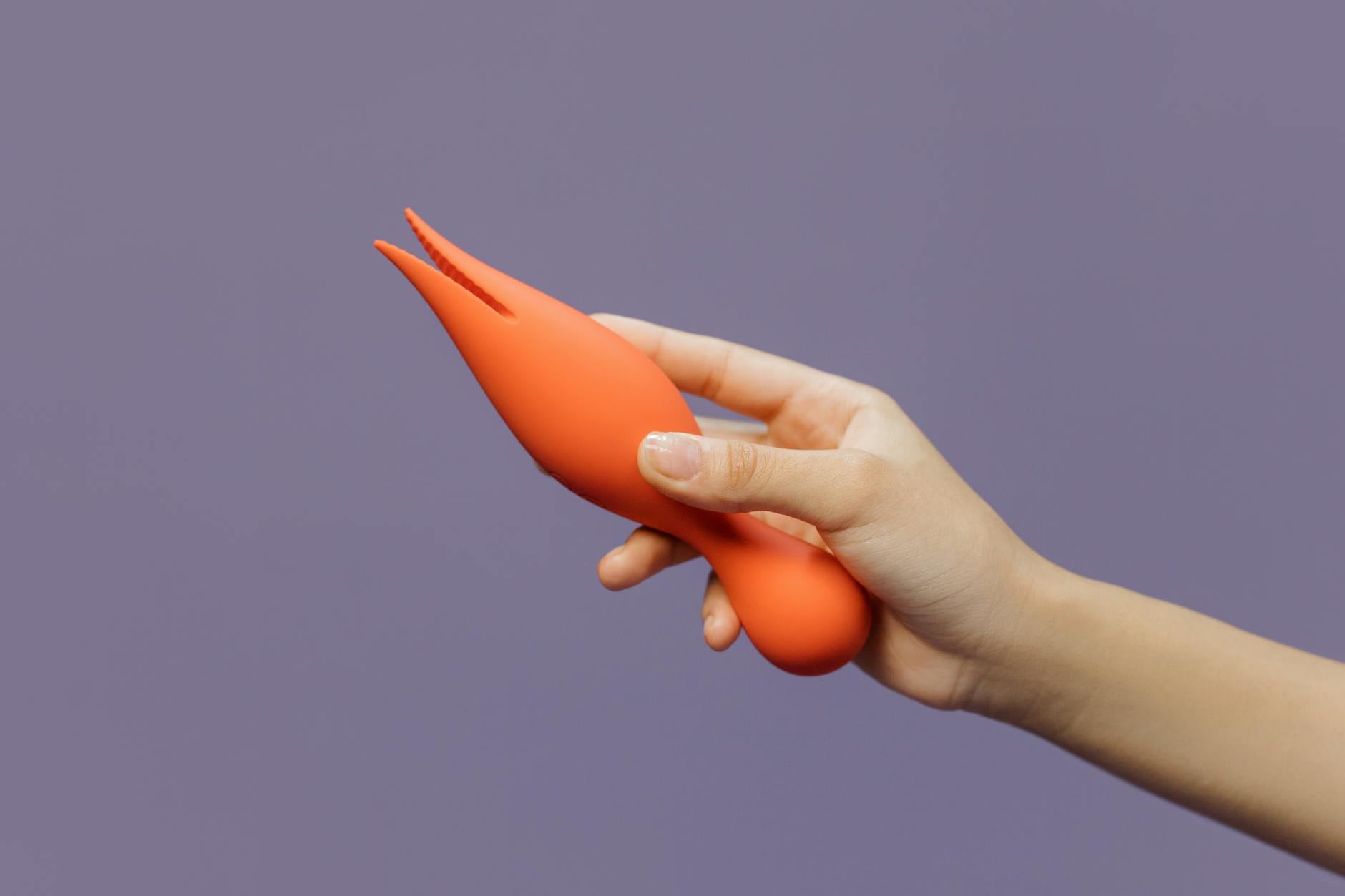
Perimenopause rewires how pleasure feels—and it's not what you think
Let's be real: perimenopause arrives with a PR problem. Nobody tells you about the actual shifts in sensation until you're mid-experience, wondering if your favorite toy just stopped working or if your body did. The truth is messier and more interesting. Your body is changing in ways that make traditional vibration feel less responsive, but a lemon vibrator's suction sensation often feels more intense and satisfying than ever.
The science explains why. During perimenopause, estrogen fluctuates wildly—some months higher than baseline, some months dipping low. These swings affect nerve sensitivity, blood flow, and tissue elasticity in your vulva. Traditional vibrators work by direct oscillation, which relies on consistent sensation. Suction-based stimulation like the Lem works differently. It pulls rather than hammers, engaging deeper tissue and nerves in a way that tracks better with perimenopause hormone patterns.
What actually changes in your body during perimenopause
You're not losing sensitivity. You're experiencing a recalibration of it. Here's the physiology:
During perimenopause, estrogen levels spike and crash unpredictably. This affects vaginal blood flow, which influences how quickly tissue engorges when you're aroused. It also changes the threshold at which nerve endings fire. A toy that felt perfect at full intensity might feel overwhelming when hormones dip, then underwhelming when they spike again.
Tissue also gets slightly thinner in some phases, thicker in others. This isn't permanent, and it doesn't mean you're broken. It means traditional vibrators—which rely on sustained, direct friction—can feel either dull or slightly irritating depending on your cycle.
Suction works around this. Instead of relying on your tissue being at a specific thickness or elasticity, suction engages the entire architecture of your clitoris. The nerve clusters deeper inside respond differently to suction than to vibration, which is why you might suddenly feel more alive with a lemon clitoral vibrator than you ever did with your old battery-operated toy.
Why suction sensation tracks better with hormonal shifts
Three reasons suction wins during perimenopause:
Pressure adapts to your body. A vibrator delivers a fixed frequency and intensity. Your body either matches it or doesn't. Suction is dynamic. As your tissue responds, the pressure builds and releases in conversation with your body. During hormone peaks and dips, this responsiveness matters more than you'd expect.
Deeper nerve engagement. Your clitoris isn't just the visible part. The internal structure extends into your body, with nerve clusters that respond to broader pressure changes. Vibration stimulates the surface. Suction pulls at the whole structure, waking up sensation that traditional toys miss. This is especially noticeable when estrogen dips and surface sensitivity fades.
Variability without desensitization. One of the hardest parts of perimenopause is that your sensitivity isn't stable month to month. A lemon vibrator's suction patterns can be adjusted down at intensity 1-2 when you're tender, then ramped up when you need more. Because suction sensation feels so different from vibration, it doesn't carry the same desensitization risk that decades of traditional vibration can create.
The timing question: when during your cycle does it matter most
Here's something they don't explain clearly: perimenopause is about unpredictability, but patterns still exist. Most people find that suction feels best during lower-estrogen phases (roughly the second half of your cycle, if you still bleed).
In these phases, tissues are slightly less engorged. Vibration can feel scratchy or require more arousal time to feel good. Suction doesn't care how engorged you are. It works by pulling, not friction, so the sensation is consistent regardless.
In high-estrogen phases, you might find that even low-intensity suction feels intense. That's normal. It doesn't mean your body is rejecting it. It means your sensitivity is responding exactly as it should.
Many people keep both tools handy during perimenopause. A traditional vibrator for high-hormone days when you want direct stimulation, and a lemon sexual toy for the in-between times when suction feels clearer and more satisfying.
How to adjust your technique as your body shifts
Starting with a lemon clitoral vibrator during perimenopause works best if you approach it with intention. Here are the adjustments that matter:
Warm up longer. Perimenopause often extends arousal time. Budget 15-20 minutes instead of 10. Use your hands, your partner, whatever primes your body. Then introduce the toy. This gives blood flow time to kick in, which makes suction sensation more responsive.
Start at intensity 1 or 2. Even if you've used other lemon vibrators before, perimenopause changes how you experience sensation month to month. Beginning low lets your nervous system adjust. You can always turn it up.
Use lubrication strategically. During lower-hormone phases, tissue can feel thinner. Water-based lube isn't about being broken. It's about comfort and protection. During higher-hormone phases, you might not need it, but it doesn't hurt to have it there.
Notice the patterns, but don't fixate. Yes, your body changes month to month. Yes, a toy might feel different depending on your cycle. This is information, not a problem to solve. Track what you notice without judgment. The goal is pleasure, not consistency.
Comparing suction to traditional vibration during perimenopause
If you're considering switching from a traditional vibrator to a lemon vibrator during this transition, here's what you're actually gaining:
Traditional vibrators deliver rapid oscillation. They work by making your tissue vibrate. For decades before perimenopause, this feels great. Your tissues are thick, well-supported by estrogen, and your nerve sensitivity is stable. The vibration drives sensation efficiently.
During perimenopause, that same direct vibration can feel less satisfying. Why? Because hormonal fluctuation makes your tissue less able to transmit vibration as cleanly. It's not that you're broken. It's that your nervous system is responding to tissue changes by becoming more responsive to pressure and less responsive to rapid oscillation.
Suction sensation bypasses this. Instead of relying on your tissue to transmit vibration, it uses pressure and release. Your clitoris is sensitive to pressure changes, and perimenopause doesn't diminish that sensitivity the way it can temporarily reduce your response to vibration.
This is why many people report that a lemon clitoral vibrator feels more intense during perimenopause than it would have at 25. Your body isn't adapting downward. It's adapting sideways into a different kind of sensation.
Managing expectations: it will feel different
One of the biggest traps during perimenopause is expecting your pleasure to remain unchanged. It won't. But different isn't worse. It's often better, once you adjust.
The first time you use a lemon vibrator during perimenopause, you might feel confused. The sensation is utterly unlike traditional vibration. It can feel almost gentle at low intensities, then surprisingly intense as you ramp up. Some people describe it as a pulling sensation, others as a gentle vacuum, others as a wave.
That diversity of description is normal. Suction sensation engages your nervous system differently than vibration does, so your brain might not have a ready reference point. Give yourself three or four sessions before deciding if it's right for you. Your nervous system needs time to map a new sensation.
When to see a doctor about perimenopause changes
If pleasure disappears entirely, that's worth investigating, but it's not usually the toy's fault.
Pain during sex, burning, or dryness that doesn't improve with lubrication points to genitourinary syndrome (common in perimenopause and easily treatable with topical options). Completely absent desire sometimes means thyroid issues or depression, both common during this transition and both responsive to treatment.
If you're using a lemon vibrator and it feels good, that's enough information. You don't need permission from a doctor to enjoy suction sensation. But if pleasure has genuinely evaporated, a conversation with a perimenopause-informed provider (your GP, a gynecologist, or an OB who specializes in midlife hormonal transitions) can clarify whether it's a medical issue or a signal that your body needs a different approach.
The bigger picture: your pleasure during perimenopause
Here's what matters most. Perimenopause lasts anywhere from four to ten years. That's a long time to assume your pleasure has gone static. It hasn't. It's evolving. A lemon vibrator's suction sensation gives you a tool that evolves with it—responsive, adjustable, and genuinely satisfying in ways traditional vibration often isn't during this specific window of your life.
You don't have to wait for menopause to stabilize your body. You don't have to decide your pleasure is diminished. You can meet your body where it actually is right now, with tools that match the reality of how your nervous system and tissue are responding.
That's not settling. That's evolution.
People also ask
Can you use a lemon vibrator during every phase of your perimenopause cycle?
Absolutely. What changes is how it feels and what intensity you'll prefer. During high-hormone phases when your tissues are more engorged and sensitive, you might find that intensity 1 or 2 feels satisfying. During lower-hormone phases, intensity 3 or 4 might feel better. The beauty of a lemon clitoral vibrator is that the suction sensation works well across the full range of perimenopause hormonal states. You're not choosing between "it works" and "it doesn't." You're adjusting within a range where pleasure remains accessible.
Does suction sensation feel stronger or weaker than vibration during perimenopause?
Neither. It feels different, which often reads as stronger because it engages your nervous system in an unfamiliar way. If you've only ever used traditional vibrators, the first time suction pulls at your clitoris, your brain might interpret that as intense when it's actually just novel. After a few sessions, your nervous system learns the sensation and can calibrate better. Many people find that suction actually feels more sustainable during perimenopause because it doesn't rely on the direct friction that can become irritating when tissue is changing.
What if I try a lemon vibrator and it doesn't feel good during perimenopause?
Then you have useful information. Suction doesn't work for every body, and that's completely fine. Try it for three or four sessions (your nervous system needs time to learn new sensation), and if it still doesn't feel good, go back to what does. Some people thrive with suction during perimenopause. Others prefer traditional vibration or hybrid toys that combine both. Your pleasure isn't a puzzle to solve. It's a signal to follow. If a lemon vibrator doesn't deliver, that's not failure. That's data.
Should I use lubrication with a lemon vibrator during perimenopause?
It depends on your phase. During lower-hormone phases when tissue is thinner or less engorged, water-based lube can increase comfort and sensation. During higher-hormone phases, you might not need it. The good news: lube doesn't interfere with suction the way it can with some vibrators. It actually helps the seal stay consistent, which can improve sensation. Keep it on hand and use it if your body asks for it.
Is it normal for a lemon vibrator to feel different each time during perimenopause?
Completely normal. Your hormones are fluctuating, which means your tissue, blood flow, and nerve sensitivity are changing week to week. A toy that felt perfect last Wednesday might feel less engaging this Wednesday. This isn't the toy failing you. It's your body communicating where it is hormonally. Once you settle into postmenopause and hormones stabilize, sensation tends to become more consistent. For now, flexibility is your friend.
Can using a lemon vibrator during perimenopause affect future sensation or pleasure?
No. Suction sensation doesn't cause desensitization the way prolonged direct vibration sometimes can. Because it works through pressure and release rather than rapid oscillation, your nervous system doesn't habituate to it the same way. Many people find that using a lemon sexual toy during perimenopause actually helps them maintain and restore clitoral sensitivity that might otherwise fade during this hormonal transition. It's one of the reasons it often works so well specifically during this life stage.
If perimenopause is making you question your pleasure, you're not alone. A lemon vibrator might be exactly the reset your body is looking for. Have questions about what would work best for you? Reach out at /contact and let's talk through it.