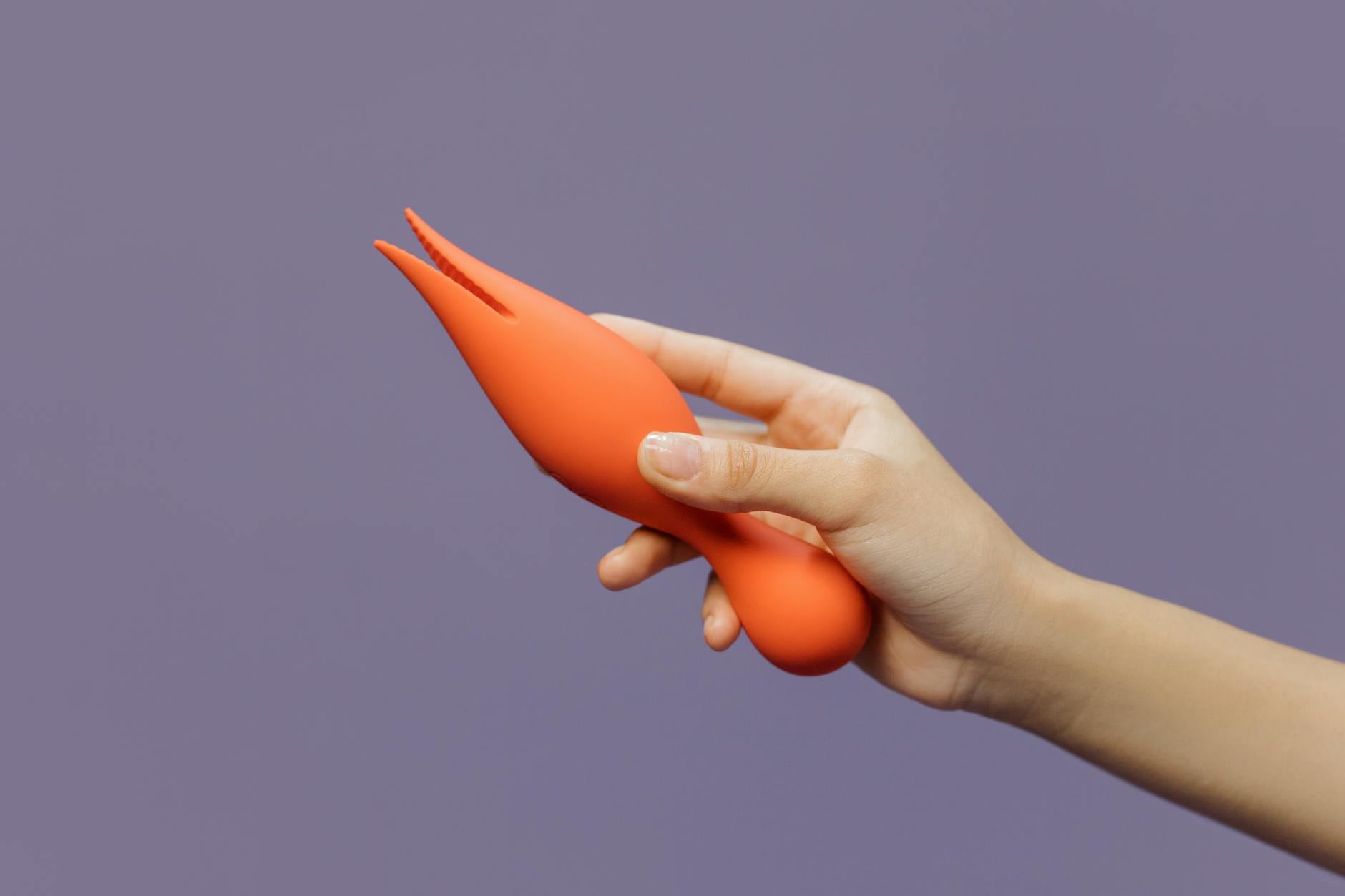
Why sensation shifts aren't a malfunction
Let's be real: something feels different after 40. Not worse. Different. The lemon vibrator that felt amazing five years ago might feel too intense now, or the sensation might be sharper, more localized, less diffuse. Your first instinct might be to assume something's broken. It hasn't. Your tissue has actually changed in ways that matter deeply to how stimulation feels.
I work with couples navigating this shift constantly, and the good news is that understanding what's happening makes it fixable. The even better news: many people discover their most satisfying sensations happen after these changes, not before. You just need to know how to work with your body instead of against it.
What happens to tissue after 40
Estrogen levels start their slow decline, usually sometime in the mid-to-late 40s (though perimenopause varies wildly by person). This isn't just a reproductive thing. Estrogen maintains skin thickness and elasticity everywhere. When it drops, the vulvar and vaginal tissue gets thinner. Not dramatically, not overnight. But measurably.
Thinner tissue means:
The surface becomes more sensitive to direct pressure. Areas that could handle firm vibration before now register it more acutely. Blood flow to the tissue changes too, which affects how quickly the body warms up during arousal. The tissue is also less resilient, so recovery time between intense sessions matters more than it used to.
Here's what doesn't change: nerve density. The clitoris has roughly 8,000 nerve endings whether you're 35 or 55. What changes is how those nerves read the input.
Why lemon vibrators adapt better to tissue changes
Traditional vibrators move back and forth really fast. For thinner tissue, that kind of direct percussion can feel like you're getting poked rather than pleasured. It's not a bad thing. It's just a fit problem.
Lemon clitoral vibrators work through suction and gentle pulsing instead. The Lem and other lemon suckers create a seal and pulse gently, which stimulates a larger area of tissue at once rather than hammering one spot. This approach has a major advantage when tissue is thinner: it distributes pressure across a broader surface, which feels smoother and less jarring.
Think of it like the difference between a precise jab and a broad wave. Both can be pleasurable, but they activate different nerve pathways and require different tissue resilience. After 40, lemon vibrators often feel better because they're working with the tissue you actually have, not the tissue you used to have.
How sensation actually changes with a lemon sucker
When you first use a lemon vibrator on thinner tissue, you might notice:
The pulsing feels less like buzzing and more like a heartbeat. Intensity settings that felt mild before might now feel just right. The sensation is often more concentrated around the clitoris rather than radiating outward. Some people describe it as sharper, cleaner, more defined.
Many of my clients say their first experience with lemon sexual toys after 40 was revelatory. They'd actually been turning down vibrators for years because the old sensations felt too raw. Then they tried a suction device and got what they'd been missing: pleasure that felt good in the tissue they actually had, not an echo of what they remembered.
The arousal phase matters more now
Once tissue thins, warm-up becomes non-negotiable. I tell people to think of it as an investment, not a delay.
Spend 15 to 25 minutes on foreplay before you introduce any device. This isn't because your body is broken. It's because the tissue needs time to fill with blood and prepare. Thinner tissue actually responds faster when it's properly aroused. You're not losing anything. You're just shifting when the response happens.
That warm-up window is also where you rediscover what turns you on mentally. Many of my clients find that once they stop fighting their body and start working with it, the entire experience of pleasure deepens. The pacing becomes intentional instead of rushed.
Lubrication is now part of your toolkit
After 40, natural lubrication often decreases. It's not because you're less aroused. It's because thinner tissue produces less mucus. This is where water-based lubricant stops being optional and becomes essential.
A quality lube doesn't mean there's a problem. It means you're removing friction that thinner tissue doesn't handle well. When you use a lemon clitoral vibrator with lube, the seal stays smooth and the sensation stays consistent. Without it, you might get discomfort or that raw feeling I mentioned.
Silicone-based lubes feel luxurious, but they can damage silicone toys. Stick to water-based. Apply generously. Reapply during longer sessions. This is wisdom, not weakness.
Why intensity settings shift for you
You might have loved pattern 8 on your old device. Now pattern 3 or 4 feels better on a lemon vibrator. This isn't desensitization. It's actually the opposite: you're more sensitive, so you need less intensity to get the same neural activation.
I see people panic about this. They think they've lost capacity. What they've actually done is discover efficiency. Your body is responding faster, not slower. The sensation just lives in a different frequency range now.
If you're using a lem vibrator or similar lemon adult toy, start at the lowest setting and work up. You'll likely find your sweet spot is lower than you expect. And that sweet spot will produce some of your most satisfying orgasms, partly because the pulsing works so well with thinner, more sensitive tissue.
The partner conversation is separate from the body conversation
Here's where I see couples get stuck. One partner notices that sensitivity or arousal timing has shifted and assumes the other person is less interested. Or the person with the changing body feels insecure and withdraws.
Neither of those is actually true. The tissue has changed. The desire is still there. But the shame often gets in the way before the pleasure can show up.
If you're working with a partner, name this explicitly. "My tissue is thinner now, which means I'm actually more sensitive, but I need more warm-up time." That's a 30-second conversation that unlocks everything. It's not criticism of them. It's useful information about your body.
Many couples find that once they stop blaming their bodies and start adapting their technique, their sex life becomes more connected than it was before. The pace slows. The attention deepens. And a lemon vibrator, used mindfully, becomes a tool that brings that intentionality into the physical experience.
When to check in with a doctor
If sensation changes feel fine but pain appears, that's different. Genitourinary syndrome of menopause (GSM) is real and treatable. A menopause-informed GP or gynaecologist can prescribe topical estrogen creams that rebuild tissue thickness without systemic hormonal effects.
Pain is never the price of pleasure. If penetration or any kind of contact starts hurting, get checked. Usually these things resolve quickly once properly diagnosed.
If desire has completely tanked alongside tissue changes, that might be worth exploring too. Sometimes it's hormonal. Sometimes it's relational. A good therapist or menopause coach can help you sort which is which.
The plot twist: your best sensations might be ahead
This is the part that usually surprises people. Once they stop fighting tissue changes and start working with them, pleasure often deepens in ways they didn't expect.
Your brain is still intact. Your desire is still there. Your capacity for orgasm is unchanged. What's shifted is the efficiency of the pathway. And sometimes, a shorter, cleaner pathway to pleasure is better than the long, complicated one you've been hiking for decades.
A lemon vibrator, especially one like the Lem with its gentle suction, becomes less of a workaround and more of the perfect fit. You're not settling for less intensity. You're discovering that the intensity you actually need was always lower than you thought.
FAQ: Lemon vibrators and tissue changes after 40
Why does my lemon vibrator feel sharper than it used to?
Thinner tissue is more sensitive. The suction from a lemon clitoral vibrator is now hitting tissue that registers input more acutely. This isn't a malfunction. It's actually a sign that you're more sensitive than before, which many people find leads to faster, more satisfying orgasms once they adjust their expectations.
Can I use my old vibrator if I adjust the settings?
You can try. Many people find that traditional vibrators feel too direct on thinner tissue, even at lower settings. Lemon sexual toys distribute pressure differently, which often feels better. But everyone's different. If your old device still feels good at a lower intensity, there's no reason to change. The goal is pleasure, not brand loyalty.
Does lube change the sensation of a lemon sucker?
Yes, but not in a bad way. Water-based lubricant softens the sensation slightly, making it less sharp and more gliding. This usually feels better on thinner tissue. It also prevents that raw feeling that can come from friction. Apply generously and reapply as needed. The sensation stays smooth and consistent.
How long does warm-up need to be now?
Aim for 15 to 25 minutes of foreplay before introducing any device. This isn't foreplay for your partner. This is foreplay for your tissue. Thinner tissue needs time to engorge with blood. Once it does, your response time actually speeds up. The 20-minute investment usually pays off in faster, deeper orgasms.
If I use a lemon vibrator more often, will sensation improve?
Not necessarily. Regular use of a quality lemon clitoral vibrator won't thicken tissue or reverse estrogen changes. But it will help you stay familiar with what feels good now, and it keeps blood flow strong to the area. If you're concerned about long-term sensation, talk to a menopause-informed doctor about topical estrogen options, which actually do rebuild tissue.
Is it normal to prefer lower intensity after 40?
Completely normal. You're not less responsive. You're actually more responsive. Lower intensity produces the same nerve activation it used to take higher intensity to achieve. This is efficiency, not loss. Most people who embrace this find their orgasms become more reliable and often more intense, because the pathway is cleaner.
Your body after 40 isn't a limitation. It's a different design with different capabilities. A lemon vibrator, especially a device designed for suction like the Lem, is built for exactly this body. The sensation might be different than it was, but different doesn't mean diminished. It usually means better.