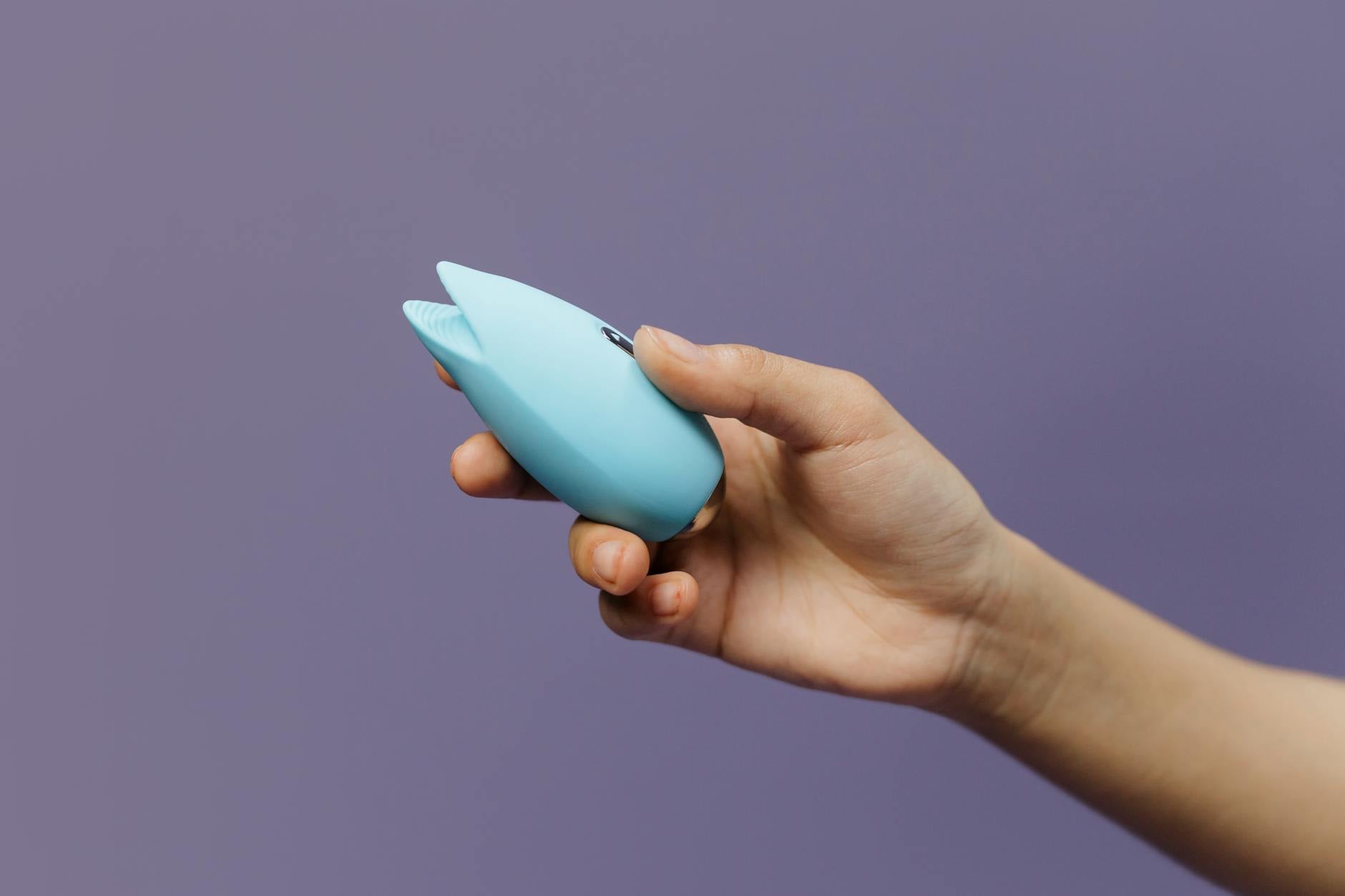
How to Introduce a Lemon Vibrator to Your Partner Without Creating Tension
Here's the thing: bringing up a lemon vibrator or any clitoral toy with a partner feels like stepping into a minefield. You rehearse the conversation in your head. You worry it will read as "you're not enough" or "I'm bored" or some other unspoken criticism. So you don't say anything, and the toy stays in the drawer.
That's the scenario I hear most often in my therapy room. The conversation itself is the barrier, not the toy.
Let me be direct: the way you frame this conversation matters enormously. Not because your partner is fragile, but because how we talk about pleasure and bodies directly shapes how we feel about them. Get the framing right, and this becomes a connection point. Get it wrong, and you've accidentally triggered insecurity that has nothing to do with the toy.
Why this conversation feels harder than it should
Most of us grew up with zero language around female pleasure, let alone tools that support it. Your partner might have absorbed the same cultural message you did: that women's orgasms should happen from partnered sex alone, and if they don't, something is wrong.
That's not true. About 70 percent of people with vulvas need direct clitoral stimulation to orgasm. Not sometimes. Regularly. That's not a deficiency, a kink, or a sign of low desire for your partner. That's anatomy.
Your partner might not know this. Many don't. Which means when you bring up a lemon vibrator, their brain might automatically go to: "Does this mean she can't orgasm with me?" Even if you don't say that and never thought it.
The goal of this conversation isn't to convince your partner that toys are necessary. It's to separate two different things that our culture has tangled up: partnered sex and your own pleasure. They're not the same thing. Both matter.
The setup conversation (before you mention the toy)
Don't lead with the toy. Lead with desire.
Pick a moment that's outside the bedroom and outside sex. A car ride, a walk, over coffee. Somewhere you're not touching and there's zero sexual pressure. This is crucial because the conversation needs to happen in your thinking brain, not your nervous system.
Start like this:
"I want to talk about something that's been on my mind, and I'm bringing it up because I care about us, not because anything is wrong. Okay?"
Then pause and let them respond. You're signaling that this is important but not a crisis.
Next: "I've been thinking about my own pleasure. Like, what actually gets me there, what I want more of, what I want to explore. And I realized I've been waiting for those things to happen in sex with you, instead of just... figuring out what I actually like. Does that make sense?"
You're not blaming them. You're taking responsibility for your own pleasure. That's not a threat to anyone.
Listen to what they say. Some partners will immediately get it. Some will need reassurance. Some might get defensive, and that's information you need to work with.
If they say something like "But I want you to have pleasure with me," you can say: "I know. And you do. This isn't instead of that. It's in addition. Think of it like, I know good chocolate, but I also want to taste different kinds of chocolate. That doesn't mean I don't like the chocolate you bring."
When and how to mention the toy
Once you've had the first conversation, give it a few days. Let it settle.
Then: "I've been thinking about what I said, and I want to be more specific. I want to try using a clitoral vibrator. Something like a lemon vibrator. I'm curious about it, and I think it might feel really good."
Notice what you're not doing: you're not asking permission. You're not making it negotiable whether you explore your own body. You're stating it as something you're interested in.
Then you offer the invitation: "I'd love if you were part of that. I think it could be fun for us. But I wanted to talk about it first."
This is different from "Is that okay with you?" You're inviting their participation while making clear that your pleasure isn't contingent on their comfort level.
Some partners will be curious immediately. Some will need time. Some will say they want to think about it, and that's fine. Don't push.
If your partner gets uncomfortable
Discomfort usually comes from one of three places.
Insecurity about inadequacy. This is the most common one. They think the toy means they're not enough.
What helps: "A vibrator does one thing really well. It provides steady, intense stimulation. You do a hundred other things. You're here with me. You pay attention. You listen. Those things aren't replaceable by a toy, and they matter more."
Then, after some time: "Actually, I'd love if you used it on me. It might feel different and better with you than alone."
Involving them directly often dissolves the insecurity because they realize it's not a replacement, it's a tool they can use.
Discomfort with the body or with sex in general. Some partners were raised in environments where pleasure was shameful or bodies were not talked about openly. A vibrator feels like it's pushing them to confront that shame.
What helps: patience and small steps. "We don't have to figure this out today. I just wanted to be honest about what I want."
Then later: "Would you be comfortable if I used this alone, and we didn't talk about it?" Sometimes distance from it helps. Other times, as comfort builds, they come around.
Concern that the toy will become a dependency. They worry you'll need it to orgasm, and that makes partnered sex feel insufficient.
What helps: "A vibrator is not a prerequisite for me enjoying sex with you. It's something I want to explore. Like how you might want to try a restaurant without that changing what we eat at home."
Then, most importantly, keep having sex without it. Keep that part of your relationship alive and present. The toy becomes an addition, not a replacement.
How to actually introduce the vibrator together
If your partner agrees to be involved, here's what I recommend.
Pick a time that's intimate but not pressured. Not "let's have sex right now." More like "let's spend time together."
Show them the toy before anything sexual happens. Let them see it, touch it, ask questions. Demystify it. A lemon vibrator is elegant and simple. It's not threatening once you've held it.
Then, when you're together and things are heading in a sensual direction, introduce it naturally. "I want to try this. Will you help me?"
You can guide their hand to hold it, or use it yourself while they're beside you. The key is that they're participating and present, even if they're not directly controlling it.
After, talk about it. Not a therapy session. Just: "That felt good. I liked having you there with me." That's the information they need to hear.
The bigger picture
Let me be honest: if your partner cannot accept that you want to explore your own pleasure, that's information about the relationship itself. Not a referendum on the toy.
A partner who loves you wants you to feel good. They might feel insecure, confused, or uncomfortable. All of those are workable. But if they're actively blocking you from exploring your body and your pleasure, that's a different conversation. That's about respect.
Using a lemon vibrator or any clitoral toy isn't selfish. It's not a threat to partnership. It's you taking responsibility for your own pleasure and inviting your partner into that journey.
Some of the best moments I've seen in relationships happen after this conversation lands right. Because suddenly, pleasure isn't something that has to happen one way. It becomes collaborative. Exploratory. Fun.
Frequently Asked Questions
What if my partner thinks using a vibrator means I'm not attracted to them anymore?
Attraction and orgasm are not the same thing. You can be deeply attracted to someone and still need direct clitoral stimulation to orgasm. One has nothing to do with the other. The reframe is: "My attraction to you is why I want to be open with you about this. I trust you with my pleasure."
Should I let my partner use the lemon vibrator on me, or should I use it myself?
Both are valid. Some people prefer to control the pace and pressure themselves. Others love having their partner be in charge. The best approach is to try both and see what feels good. Many couples find that alternating between self-use and partner-use during intimate time works well. You can also use it during partnered sex without him being directly involved.
What if my partner wants to be involved but gets anxious about "doing it wrong"?
Vibrators are intuitive. There's almost no wrong way to use one. You can guide them: "A little slower," "I like that," "Move it slightly up." Most partners actually enjoy this because it gives them feedback about what you like in real time. That's valuable information for all sex you have together.
How long should I wait after bringing up the toy before actually using it?
There's no fixed timeline. Some couples are ready in days. Others need weeks for the conversation to settle. The key is that both people feel genuinely comfortable, not just resigned. If your partner says yes but sounds uncertain, give it more time. Real buy-in feels different than compliance.
Is it okay to introduce a clitoral vibrator if we're having relationship problems?
Not as a fix. If the relationship has deeper issues, a toy won't solve them. In fact, it might create more tension if trust is already fragile. Address the relationship stuff first. Once there's solid ground, exploration becomes possible.
What if I want to use a lemon vibrator but my partner absolutely refuses?
You can use it alone. Your pleasure doesn't require your partner's approval. But if they're so uncomfortable with it that they're blocking you from exploring your own body, that's worth examining. Either in conversation with them or with a therapist. Because that dynamic shows up in other parts of life too.
The bottom line
Bringing up a lemon vibrator or any clitoral toy isn't about the toy. It's about saying: "My pleasure matters. I want to explore it. I want you with me if you're willing."
Some partners will be thrilled. Some will take time. Some will surprise you by becoming more interested than you expected.
What matters is that you're having the conversation with honesty and without shame. Everything else follows from there.
If you need more support navigating this or other intimate conversations with your partner, I'm here. Reach out anytime.