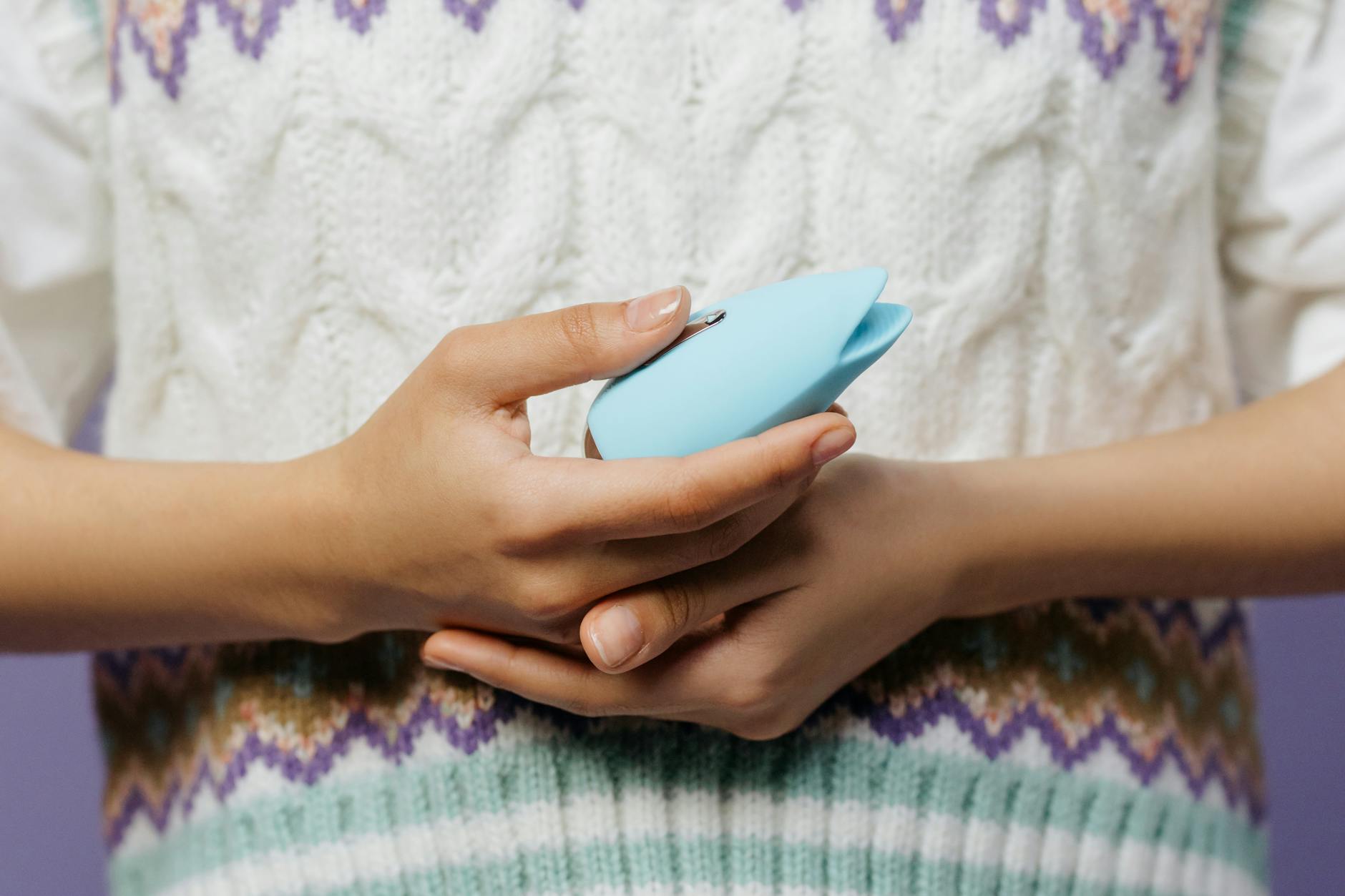
Let's start with the obvious part
You and your partner don't move at the same pace. Maybe they finish quickly. Maybe you need longer to build arousal. Maybe the angle that works for them leaves you untouched. Maybe you're both trying so hard to coordinate that the pleasure disappears entirely. This isn't a relationship failure. It's just bodies.
Here's what most couples don't realize: adding a lemon clitoral vibrator doesn't mean you're fixing a problem. It means you're removing the pressure to be in sync. When your clitoris has its own independent stimulation, suddenly neither of you needs to perform timing gymnastics.
Why coordination actually matters (and when it doesn't)
Coordination feels urgent because we've been taught that partnered sex happens on one timeline. One person leads, one person follows, and if the rhythm breaks, something is wrong. In reality, that model works for maybe 30% of couples naturally. For everyone else, it's exhausting.
When you introduce a lemon sucker or clitoral vibrator, you're creating what I call "parallel pleasure." Your partner does their thing. You do yours. You're together, but not dependent on synchronized movement.
This is especially important if your partner finishes before you do. With penetration alone, you're racing against biology. With a lemon vibrator, you can both enjoy the experience at your own pace and still reach pleasure together.
The setup conversation (yes, have it)
Introducing a vibrator into partnered sex sometimes carries weird shame. Here's my advice: strip the shame by being boring about it.
Don't make it a big emotional conversation. Don't frame it as "I need this because you're not enough." Instead, say something like: "I'm thinking about using a vibrator sometimes when we have sex. It would help me get there faster, and I think we'd both enjoy it more." Then move on.
If your partner seems hesitant, ask what specifically worries them. Usually it's one of three things: they think it means they're failing, they're worried it'll take attention away from them, or they just need time to adjust to the idea. All three are addressable with honesty.
Here's the reframe: a lemon vibrator isn't a replacement. It's a tool that makes partnered sex more pleasurable for both of you because you're not spending mental energy trying to time things perfectly.
Positioning for comfort and connection
The position you're in changes how a clitoral vibrator works during partnered sex. Some positions leave your clitoris exposed and easy to reach. Others don't.
If you're on top: You have full control. You can reach between your bodies with the vibrator while managing the penetration depth and rhythm. This is the easiest position to add a lemon clitoral vibrator because you're not balancing on anything.
If you're facing each other and side-by-side: You or your partner can hold the vibrator. The closeness is still there because you're maintaining eye contact and physical contact. This position works brilliantly for longer sessions because there's less muscle fatigue.
If your partner is behind you: This is trickier but very possible. Your partner can reach around, or you can hold the vibrator yourself while they do their thing. The angle change actually gives better access to the clitoris in some cases.
If you're lying flat on your back: Probably not ideal for a vibrator unless your partner is holding it, because you can't reach comfortably. Save this position for sex without the vibrator.
The goal isn't to force the vibrator into every position. It's to find 2-3 positions where it feels natural and flows easily into the sex you're already having.
The rhythm question (spoiler: it doesn't have to match)
Here's where I see couples get confused. They think that if they're using a vibrator, their partner's movement and the vibrator's intensity need to be in sync. They don't.
Your partner can move slowly and deeply while the vibrator is on a faster pattern. You can control the vibrator's speed independently. This actually works better than trying to coordinate, because you get multiple sensations layering on top of each other.
Start with the vibrator on a lower pattern (1-2) and let your partner move at their natural pace. Then you adjust the vibrator's intensity based on what feels good. If you need it stronger as penetration deepens, turn it up. If intensity feels like too much, dial it back. Your partner doesn't need to change a thing.
Over time, you might find a rhythm that works. But that's a bonus, not a requirement. The whole point is pleasure without pressure.
Managing stimulation levels when everything feels like too much
Sometimes when you're adding vibration to penetration, the combined sensation becomes overwhelming. Your clitoris gets overstimulated, or the sensations feel chaotic instead of good.
If that happens, pull back. Literally. Lower the vibrator's intensity one level. Or use it for shorter bursts instead of continuous stimulation. Or take a break and just enjoy penetration without it for a bit.
Also consider this: if the sensation feels intense the moment you add the vibrator, your arousal might not be where it needs to be yet. Spend 5-10 minutes building arousal before introducing the vibrator. Let your body warm up first.
One useful trick is using the lemon vibrator during foreplay to build arousal before penetration even starts. By the time your partner enters, you're already partway to orgasm, and the vibrator becomes a way to finish strong instead of a tool to play catch-up.
What to do if your partner struggles with this
Sometimes even after the conversation, a partner feels bothered by the vibrator during sex. Common feelings: threatened, like they're not enough, worried you're fantasizing about someone else, or just plain awkward.
None of those feelings are wrong. They're just information. When someone feels uncomfortable with a vibrator, pushing it usually makes things worse. Instead, pause and get curious.
Ask: "What's making this feel weird?" Listen without defending. Maybe they need reassurance that you're attracted to them. Maybe they need to hold the vibrator themselves so they feel involved. Maybe they need you to use it in a position where they can see your face and know you're present with them.
The goal isn't to convince your partner the vibrator is good. The goal is to find a way to use it (or not use it) that feels good for both of you. If that means using a clitoral vibrator only when you're having solo sex, that's fine. If it means they hold it during partnered sex, that's fine too.
How a lemon vibrator actually strengthens connection
This might sound counterintuitive, but removing the pressure to be in perfect sync usually deepens intimacy. Here's why: when you're not stressed about timing, you can actually pay attention to your partner. You can look at them. You can enjoy their presence instead of just trying to orgasm before they lose steam.
A lemon clitoral vibrator removes a source of tension that many couples don't even realize is there. You get to stop apologizing for taking longer. They get to stop feeling rushed. Both of you get to focus on what feels good instead of what's supposed to happen.
Over time, couples who use vibrators during partnered sex often report that the sex becomes less goal-focused and more pleasure-focused. You're not racing to finish together. You're just enjoying each other at your own pace. That's a fundamentally more connected experience.
Starting small if you're nervous
You don't need to jump into using a lemon sucker during full partnered sex if that feels like a lot. Start by introducing it during foreplay. Let your partner watch you use it. Let them hold it if they want to. Build comfort gradually.
Or start by using it when you're having partnered sex but aren't focused on finishing. Use it during a longer session where there's no performance pressure. You might find it feels completely natural once you're not anxious about it.
The point is this: a clitoral vibrator is a tool. Tools don't have emotional weight. They're just there to make things feel better. The more you treat it that way, the faster any initial awkwardness fades.
The bigger picture: pleasure without performance
Coordination problems in partnered sex usually point to something deeper. We've learned that good sex means bodies moving in sync, finishing together, and effortlessly knowing what the other person wants. Real sex is messier and more interesting than that.
When you introduce a lemon vibrator, you're not fixing your bodies. You're changing the narrative. Instead of "can we coordinate," the question becomes "what actually feels good." That's a conversation that usually leads somewhere better.
The best sex isn't the most coordinated. It's the sex where both people are paying attention to their own pleasure and their partner's pleasure simultaneously. A vibrator helps you do exactly that.
FAQ
How do I know if my partner is actually okay with me using a vibrator during sex?
Watch their body language and ask directly. If they seem tense, they're probably not okay with it yet. If they ask questions or suggest positions, they're getting curious. And if they laugh and relax, you're good. A partner who's genuinely fine with it will usually say something like "okay, let's try it" without a lot of drama. Trust what you see more than what you hear.
Can I use a lemon vibrator if my partner takes a long time to finish?
Absolutely. In fact, this is one of the best scenarios for using a vibrator. Your partner can take as long as they need while you reach orgasm on your own timeline. You both finish satisfied instead of one of you getting frustrated or bored. It actually makes longer sessions more fun for both of you.
What if using a vibrator makes me forget my partner is even there?
That's a sign you need more connection, not less vibration. Try positions where you can see your partner's face or maintain physical contact. Hold each other. Make eye contact. Use the vibrator as a tool that brings you closer, not one that isolates you. The vibrator should enhance the experience of being together, not replace it.
Is it weird to need a vibrator to orgasm during partnered sex when I can finish easily alone?
No. Partnered sex and solo sex are completely different neurologically. Your brain, your arousal level, the sensations involved. all shift when someone else is there. Many people need more stimulation during partnered sex for exactly that reason. A vibrator isn't weird. It's practical.
How long does it usually take to feel comfortable using a vibrator with a partner?
It depends on the couple. Some people try it once and immediately feel fine. Others need a few sessions to get comfortable. Some couples use a vibrator for months before it feels totally natural. There's no timeline. Just keep communicating and adjusting as you go.
What if I want to use a vibrator but my partner absolutely refuses?
That's worth having a real conversation about. Ask what the refusal is actually about. Is it insecurity? Discomfort? A genuine boundary? Listen to the answer. If it's insecurity, that's addressable through reassurance and conversation. If it's a genuine boundary, respect it. You might decide to use the vibrator only during solo sex, or you might both decide partnered sex just works better without it. Either way, you make the decision together.